
Compute Chips
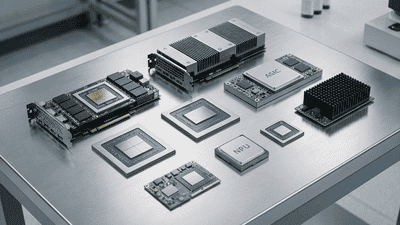
Vera Rubin Platform Breakdown: 7 Chips, 5 Racks, and a 10x Inference Efficiency Leap
Nvidia’s Vera Rubin platform is easiest to understand as a coordinated AI infrastructure system, not simply a new GPU surrounded by accessories. Its components divide responsibility across computation, networking, storage, and orchestration so that fewer resources sit idle while another part of the system becomes a bottleneck.

Nvidia’s Groq 3 LPU: The Inference Coprocessor That Could Reshape AI Server Architecture
For years, the AI infrastructure conversation has revolved around a familiar question: how many GPUs can a data center deploy? Nvidia’s Groq 3 LPU suggests that the next question may be more interesting: which parts of an AI workload should actually run on those GPUs?
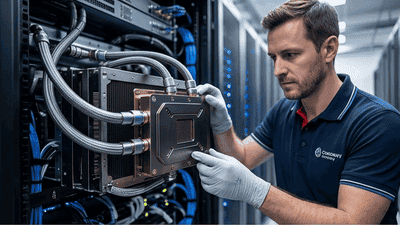
Liquid Cooling for 1000W+ AI Chips: The Infrastructure Bottleneck Nobody Priced In
The accelerator arrives. The server vendor has completed its work. The software team is ready to begin testing. Then the deployment stalls because the building cannot remove enough heat.
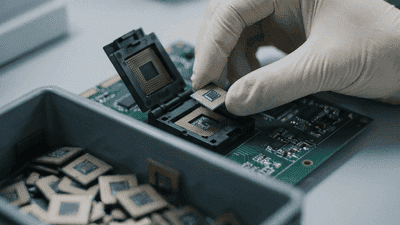
AI Chip Yield Challenges at 3nm: The Cost of Advanced Node Scaling
A smaller manufacturing node promises more computing capability within a constrained footprint. For AI chips, that can mean additional arithmetic units, improved energy efficiency, or room for functions that would be difficult to accommodate on an older process. The attraction is obvious. The economics are less automatic.
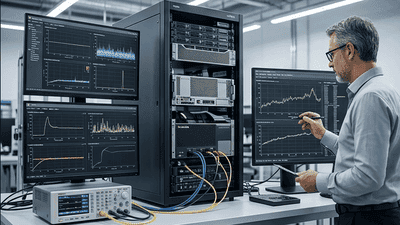
TPU 8t Commercial Launch: Can Google’s Custom Silicon Finally Challenge Nvidia’s Moat
Google’s TPU 8t can challenge Nvidia in selected large-scale AI workloads, but it does not need to replace GPUs everywhere to matter. Its strongest opportunity is to make Google’s infrastructure an attractive alternative for customers willing to optimize models and software around a different computing platform.
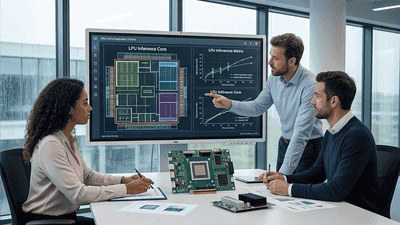
Custom Silicon for Inference: Why Hyperscalers Are Designing Their Own LPUs
The economics of AI change when a model moves from development into daily use. Training attracts attention because it requires spectacular computing resources. Inference creates the recurring bill: every search, generated answer, recommendation, and coding suggestion consumes computing capacity.

The Post-Moore Path for AI Chips: Advanced Packaging Succeeds Process Scaling
For decades, the semiconductor industry rode a remarkably simple storyline: shrink transistors, pack more of them onto a die, and enjoy automatic gains in performance and efficiency. That story—embodied in Moore’s Law—still matters, but for AI chips in the mid‑2020s it is no longer the sole, or even primary, driver of progress.

Global AI Accelerator Market Breaks $250B in 2026: A Supply Chain Teardown
By 2026, AI accelerators have moved from niche hardware to the beating heart of modern compute, powering everything from frontier model training to real‑time inference across clouds, enterprises, and edge devices. Crossing the $250 billion mark in annual market value is not just a milestone; it is a reflection of a vast, intricate supply chain that stretches from design labs and fabs to packaging houses, board makers, system integrators, and the services that wrap around them. Understanding how this value is created and captured requires a teardown of the AI accelerator supply chain, layer by layer.

AI Chip TDP Grows 50% Per Gen, Data Center Power Architecture Faces Reassessment
Over the past several AI chip generations, one trend has become impossible to ignore: thermal design power (TDP) is climbing at a pace that would have seemed extreme even a few years ago. When flagship accelerators and high‑end AI chips see TDP grow on the order of 50% per generation, the consequences extend far beyond chip packaging.

Practical Breakthroughs of Domestic EDA Tools in AI Chip Design (Huada/Prime)
As AI chips surge to the forefront of national technology strategies, attention has increasingly turned from fabs and packaging to a crucial but less visible layer: electronic design automation (EDA). For many years, domestic EDA tools lagged behind international leaders, limiting how far local firms could push advanced AI chip design without external dependencies.